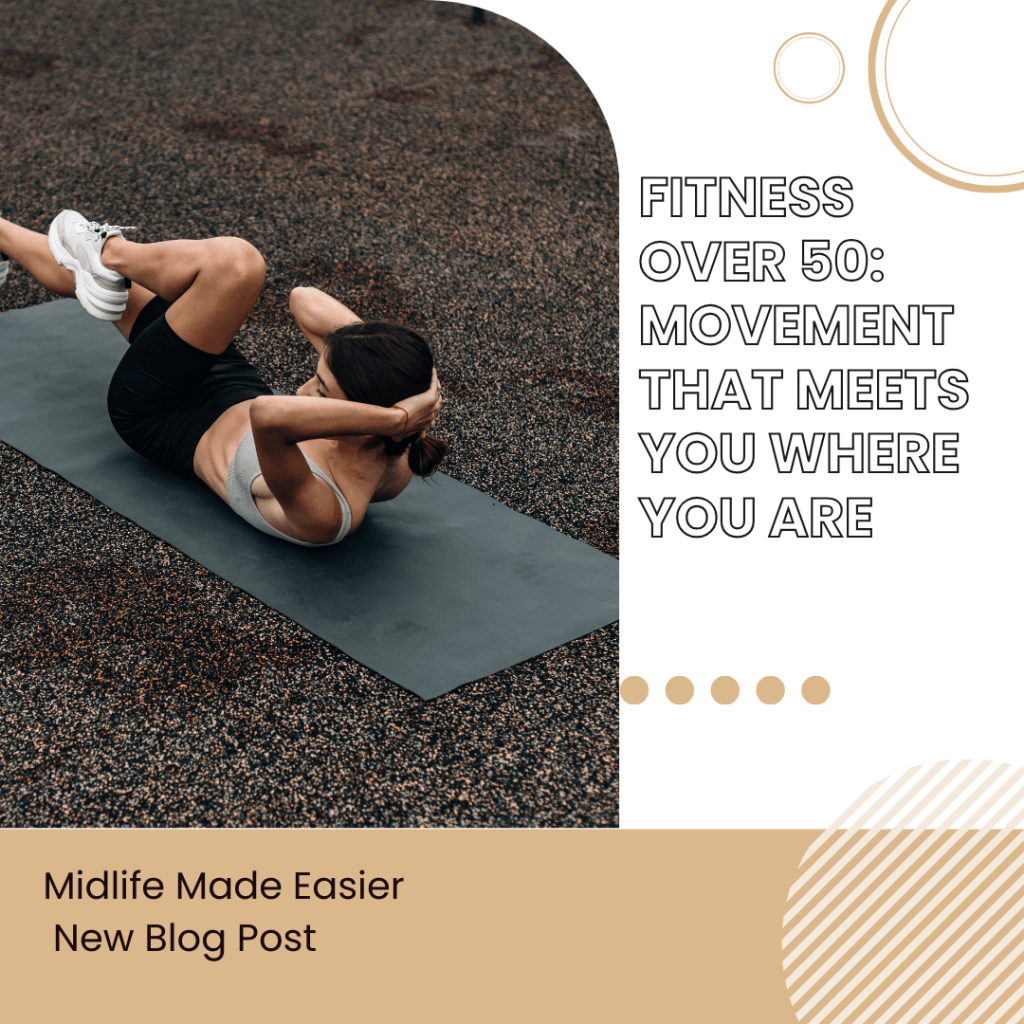
Hello and welcome to the Midlife Made Easier blog, a supportive space where midlife women prioritize their healing, reclaim their power, and build a life they love. This is your place to take charge of your well-being, find your voice, and feel seen, supported, and strong. Here, we shine a light on the unique health challenges women face in midlife with compassionate guidance, real-life strategies, and inspiration to help you thrive, not just survive.
✨ Free Resource for You: The Midlife Reboot Workbook, a step-by-step guide to help you restore balance, rebuild energy, and create a sustainable plan for your mind and body.
Why Movement Matters More Than Ever After 50
We all know the truth: if we stop moving, we lose mobility, muscle mass, and cardiovascular strength. And when that happens, our risk for a long list of health issues, from diabetes to osteoporosis, increases dramatically.
But let’s be honest, when you hear the word “fitness,” your mind might immediately jump to burpees, sit-ups, or lifting weights heavier than a small car. And for many of us over 50, that sounds not just unappealing, but downright impossible.
The good news? Fitness doesn’t have to look like it did in your 20s or even your 40s. Movement at this stage of life is about finding what works for you, honoring your body, and building a plan you can actually enjoy and sustain.
My Story: From Runner to Starting Over
For years, I was a runner. I ran almost every day, two or three miles regularly, and more if I was training for a race. I even taught yoga classes and made walking part of my daily routine. Movement was my therapy, my joy, and my outlet.
Then menopause hit. The weight came on quickly, my joints ached, and everything started to feel harder. And then came the real blow: I fell. That one moment stopped me in my tracks. I stopped running, stopped teaching yoga, even stopped walking, the one activity that had always brought me peace.
And here’s the part I want you to hear: once you stop moving, starting again feels incredibly hard. But it is possible. Step by step, I found my way back to movement that fit my new body, my new life stage, and my new energy levels.
Why One-Size-Fits-All Workouts Don’t Work
Scroll through Instagram or YouTube, and you’ll find endless workout routines promising quick fixes. But many of these are designed by 25-year-old influencers whose bodies, hormones, and energy levels are vastly different from ours in midlife.
That doesn’t mean those workouts are “bad,” but they may not be the right fit for your needs. What we need after 50 is movement that:
- Protects joints instead of punishing them
- Strengthens muscles to support bone health
- Improves balance and mobility
- Boosts mood and reduces stress hormones
- Fits into your daily life without burning you out
How to Build Your Movement Plan
1. Define Your Goal
Ask yourself: What do I really want right now? Is it weight loss? Gaining strength? Improving flexibility? Or maybe it’s simply feeling more energized during the day. Knowing your goal helps you pick the right type of movement.
2. Choose Sustainable Activities
If you hate running, don’t force yourself to run. Try walking, yoga, swimming, cycling, or strength training with light weights. The “best” workout is the one you’ll actually do consistently.
3. Start Small and Progress Slowly
Don’t go from zero to 100 burpees. Start with 10 minutes of walking or gentle stretching. Over time, add minutes, increase resistance, or explore new classes. Small, steady steps add up.
4. Listen to Your Body
Pain is a signal, not a challenge. If something feels wrong, modify or try something else. Movement should leave you feeling stronger, not broken.
What Happens If You Stop Moving
Take it from me, you don’t want to stop. When you quit moving, you lose muscle at a faster rate, your bones weaken, and simple activities (like climbing stairs or carrying groceries) become harder. Beyond the physical, stopping movement can also impact your mood, energy levels, and confidence.
But here’s the hope: every step forward matters. It’s never too late to begin again.
Pulling It All Together
Fitness over 50 isn’t about keeping up with the 25-year-olds or pushing yourself into extreme routines. It’s about honoring your body, choosing movement that supports your health, and building consistency that carries you into the years ahead with strength and confidence.
Remember: the best workout is the one that meets you where you are today, and moves with you into the future.
Well, my friend, that is all I have for you today. Please share this post with someone you love. Let us know in the comments: What kind of movement makes you feel your best right now? 📝
With Peace & Love,
Renee 💜

 Midlife Made Easier