
How to Find a Support Group for Mental Illness When You’re An Introvert

Living with a mental illness can be challenging; if you are in midlife, you might be thinking that you will never feel better. Finding the proper support is crucial for your well-being. Support groups can provide a sense of community, understanding, and valuable coping strategies. However, for introverts, joining a support group can be daunting. Here are some tips to help you find a support group that meets your needs, even if you’re more inclined towards introversion.

Download our new book and get 20% off Liberate Your Life: A Journey to Self-Discovery and Wellness Journal 🌟 Introducing “Liberate Your Life: A Journey of Self-Discovery and Wellness” 🌟 Unlock the power within you and embark on a life-changing voyage of self-discovery with our transformative journal!

1. Online Support Groups

Benefits: Online groups offer the opportunity to connect with others from the comfort of your home, which can be less intimidating for introverts.

How to Find Them: Look for forums, Facebook groups, or dedicated websites on mental health support.

2. Start Small

One-on-One Support: Consider starting with individual therapy or counseling before joining a group. This can help build your confidence and provide valuable coping skills.

Peer Support: Some organizations offer peer support programs where you can connect with others with similar experiences in a more intimate setting.

3. Research and Preparation

Search Online: Look for groups catering to your needs or interests. For example, if you have social anxiety, you may want to find a group that focuses on this issue.

Attend Open Meetings: Some support groups have open meetings that you can attend immediately without the pressure of participating. This can give you a feel for the group before fully committing.

4. Communication Preferences

Contact the Group Leader: Contact the group leader or facilitator beforehand to discuss concerns. They can often provide guidance and reassurance.

Express Yourself: Don’t feel pressured to share more than you’re comfortable with. Taking your time and listening is okay until you feel ready to participate.

5. Create Your Own Group

Small, Trusted Circle: If you can’t find a group that suits you, consider creating a small support circle with friends, family, or online acquaintances you trust.

6. Self-Care and Boundaries

Set Boundaries: It’s important to set boundaries and prioritize your mental health. If a group becomes overwhelming, stepping back or leaving is okay.

Self-Care: Engage in self-care activities before and after group meetings to help manage any anxiety or stress.

7. Give Yourself Credit

Recognize Your Courage: Taking steps to seek support, especially as an introvert, is a brave and vital decision. Acknowledge your efforts and progress, no matter how small they may seem.

As a verified introvert, finding a support group that aligns with your needs and comfort level is possible, even for an introvert. Remember, taking things at your own pace and prioritizing your well-being throughout the process is okay. Your mental health is important and should be at the top of your to-do list; putting yourself first may take some time to get used to; as women, we are so used to putting everyone’s needs before our own. This is your time; if you need help, we are here to support you.

With Peace & Love,

Renee

Resources:

For a curated collection of inspirational and fun gifts for yourself or someone you love, visit Renee & Ruby’s. You will get 20% off your entire purchase, and Afterpay is available.
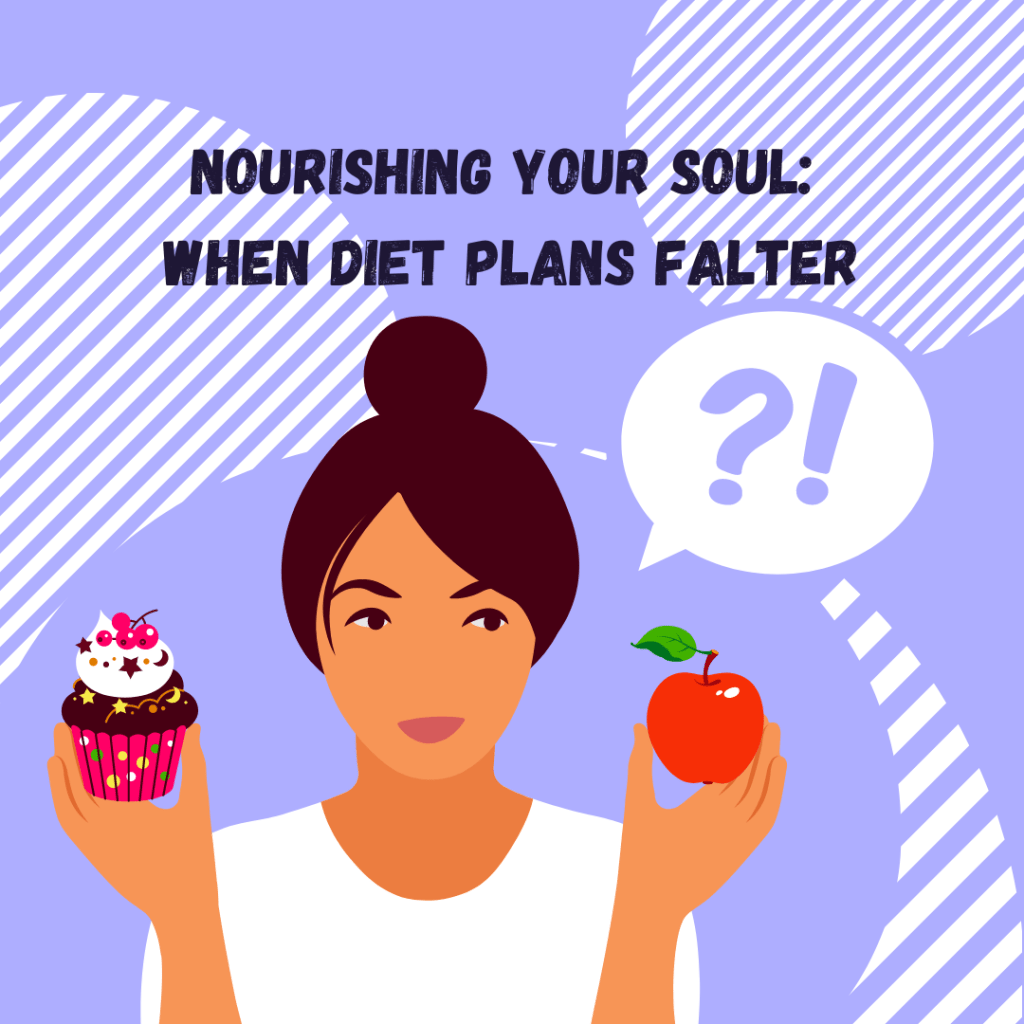

Nourishing Your Soul: When Diet Plans Falter

When my friend was about to undergo her weight loss surgery, the one thing she feared was the weight coming back; I remember her crying and shaking her head because this surgery was her last hope; in her mind, it was the last straw of her dieting journey if this didn’t work there was nothing else, no plan B.  Today, let’s talk about something we all face: the difficulties of dieting.  You know the drill – you start strong, motivated, and determined to stick to your plan. But then life happens, stress kicks in, and that bag of chips or slice of cake suddenly looks too tempting. You indulge, and guilt and self-criticism creep in before you know it. Sound familiar?

As midlife women, we often carry the weight of many responsibilities – career, family, relationships – and sometimes, our well-being takes a backseat. When we slip up on our dieting journey, the negative self-talk can be relentless. We beat ourselves up with phrases like:

  1. “I have no willpower.”
  2. “I’m a failure.”
  3. “I’ll never reach my goals.”
  4. “I’m so weak.”
  5. “I’m disgusting.”

But here is the truth: you are none of those things. You are resilient, strong, and deserving of compassion – especially from yourself. So, how can you show yourself the kindness you deserve when you fall off your diet plan? Here are some gentle reminders:

1.  Practice Self-Compassion

Instead of berating yourself for slipping up, practice self-compassion. Treat yourself with the kindness you would offer a friend in a similar situation. Remind yourself that it is okay to stumble; how you respond with understanding and forgiveness matters.

2.  Challenge Negative Thoughts

When those mean thoughts creep in, challenge them. Ask yourself if they are true or just a product of your inner critic. Replace them with positive affirmations like, “I am human, and it’s okay to have moments of indulgence.”

🌟 Support the Midlife Made Easier Blog and our mission to Empower Midlife Women By shopping at our store Renee & Ruby’s! 🌟

At Renee & Rubys, every purchase you make helps us continue providing valuable blog content and community programming for midlife women looking to take control of their health, finances, relationships, and careers. Your support means the world to us, and we’re thrilled to offer you 20% off your entire purchase as a thank you! 💖✨

Shop now and use Afterpay for convenient, interest-free payments. Together, we can make a difference, one purchase at a time. 🛍️💪

🔗 [Shop Now]

Thank you for being a part of our mission! 🙏

3.  Focus on Progress, Not Perfection

Ditch the all-or-nothing mindset. Remember that progress is not linear, and every step forward – no matter how small – is worth celebrating. Give yourself credit for the effort you have put in and the progress you have made so far.

4.  Practice Mindful Eating

Instead of viewing food as the enemy, cultivate a mindful eating practice. Tune into your body’s hunger and fullness cues and savor each bite without judgment. You can enjoy your food without guilt or regret by being present in the moment.

5.  Seek Support

You are not in this alone. Contact friends, family, or a support group who can offer encouragement and understanding.  Sharing your struggles can lighten the load and remind you that you are not defined by a number on a scale.

6.  Prioritize Self-Care

Lastly, prioritize self-care in all its forms –taking a bubble bath, walking in nature, or indulging in a hobby you love. Nourish your body, mind, and soul with activities that bring you joy and replenish your spirit.

In the journey towards health and wellness, it is important to remember that perfection is not the goal. Diet plans are tools, not final destinations. They guide us, offer structure, and can foster positive change, but they are not infallible. It does not mean you have failed when they falter—and they often will. It simply means you are human.

Your worth is not measured by your adherence to a diet or the numbers on a scale. Instead, it is defined by your resilience, commitment to bettering yourself, and capacity for self-love and compassion. When diet plans falter, it is an opportunity to reconnect with the deeper reasons behind your health journey. It is a chance to listen to your body, understand its needs, and respond kindly.

Take a moment to breathe and reflect on how far you have come. Celebrate the small victories, the moments of progress, and the lessons learned along the way. Embrace the setbacks as part of the process, not as a sign to give up but as a reminder to be gentle with yourself. Your journey is unique, and navigating it at your own pace is okay.

Remember, nourishing your soul is just as important as nourishing your body. Engage in activities that bring you joy, surround yourself with supportive people, and practice self-care. When you approach your health journey with a holistic mindset, balancing physical, emotional, and spiritual well-being, you build a foundation that supports lasting change. Unfortunately, my friend did gain some weight back after her surgery, but we used these very tips to help her manage her mindset and focus on her emotional health. This has enabled her to stick to her healthy weight.

So, when diet plans falter, let it be a moment to pause, reassess, and continue forward with renewed dedication and a compassionate heart. You are more than your diet plan—you are a resilient, wonderful being capable of incredible growth and transformation. Keep nourishing your soul, and trust that you are on the right path, one step at a time.

With Peace & Love,

Renee

🌟 Introducing “Liberate Your Life: A Journey of Self-Discovery and Wellness” 🌟

Unlock the power within you and embark on a life-changing voyage of self-discovery with our transformative journal! 🚀

🔍 Peel back the layers of your life with 118 daily prompts designed to uncover insights, overcome obstacles, and chart a course toward the life you desire.

💪 Embrace empowerment as you navigate a holistic exploration of wellness, reclaiming your joy and vitality step by step. Download today, get 20% off your purchase.

Unlocking Peak Productivity: Crafting Your Ideal Summer Morning Routine

I love summer. As the sun rises higher and the days grow longer, there is something undeniably invigorating about the arrival of summer. With its promise of warmth, vitality, and endless possibilities, it is the perfect time to reevaluate and revamp your daily routine. Harnessing the energy of summer mornings can set the tone for a day filled with productivity, creativity, and overall well-being. In this blog post, we will explore how to create a summer morning routine that embraces the spirit of the season and boosts your productivity to new heights. 

Embrace the Early Hours:

One of the greatest gifts of summer is the early sunrise. Take advantage of this natural alarm clock by rising with the sun. Waking up early allows you to seize the quiet, uninterrupted morning hours when the world is still asleep. Use this time for activities that set a positive tone for the day ahead, such as meditation, journaling, or enjoying a leisurely breakfast outdoors.

Move Your Body:

Summer is synonymous with movement and activity. Incorporate exercise into your morning routine to jumpstart your metabolism, increase energy levels, and enhance mood. Whether it is a brisk walk, a yoga session in the garden, or a refreshing swim, find an activity that energizes and gets your blood flowing. Not only will exercise invigorate your body, but it will also sharpen your focus and concentration for the tasks ahead.

Hydrate and Nourish:

Proper hydration is essential for optimal brain function and overall well-being. Start your day by drinking water to replenish fluids lost during sleep. Follow this with a nutritious breakfast filled with seasonal fruits, whole grains, and protein. Fueling your body with wholesome foods provides sustained energy throughout the morning, preventing mid-morning crashes and keeping your mind sharp.

Set Intentions:

Before diving into the demands of the day, take a moment to set intentions for how you want to feel and what you want to accomplish. Reflect on your short-term and long-term goals and visualize yourself achieving them. Write down your intentions in a journal or create a vision board to keep them at the forefront of your mind. This practice clarifies your priorities and instills a sense of purpose and motivation to tackle the day ahead.

Unplug and Connect with Nature:

In our hyper-connected world, it is all too easy to succumb to the distractions of technology, especially in the morning. Resist the urge to check emails or social media as soon as you wake up. Instead, dedicate time to disconnecting from screens and reconnecting with nature. Spend a few moments outdoors, whether sipping your morning coffee on the porch or taking a barefoot stroll through the grass. Immersing yourself in the beauty of the natural world grounds you in the present moment and fosters a sense of calm and tranquility.

Summer mornings hold the promise of endless potential and opportunity. By crafting a morning routine that harnesses the season’s energy, you can supercharge your productivity and set yourself up for success. Whether embracing the early hours, prioritizing movement and nourishment, or setting intentions for the day ahead, small changes to your morning routine can yield significant results. So, seize the day, soak up the sunshine, and make this summer your most productive!

With Peace & Love,

Renee

Resources:

Resources

Download our new book and get 20% off Liberate Your Life: A Journey to Self-Discovery and Wellness Journal 🌟 Introducing “Liberate Your Life: A Journey of Self-Discovery and Wellness” 🌟 Unlock the power within you and embark on a life-changing voyage of self-discovery with our transformative journal! 🚀

For a curated collection of inspirational and fun gifts for yourself or someone you love, visit Renee & Ruby’s. You will get 20% off your entire purchase, and Afterpay is available.

Menopause and Heart Disease: What Women Need to Know

Menopause is a natural biological process that marks the end of a woman’s menstrual cycle. It typically occurs in women in their late 40s or early 50s, signaling the end of their reproductive years. While menopause is a normal part of aging, it can bring about various changes in the body, including an increased risk of heart disease.

The Link Between Menopause and Heart Disease

Heart disease is the leading cause of death for women in the United States, surpassing all forms of cancer combined. The risk of heart disease increases with age, and menopause seems to play a significant role in this increased risk.

During menopause, a woman’s body undergoes hormonal changes, particularly a decline in estrogen levels. Estrogen is believed to have a protective effect on the cardiovascular system, helping to maintain healthy blood vessels and lower cholesterol levels. As estrogen levels decrease during menopause, women become more susceptible to heart disease.

Understanding the Risks

Several factors contribute to the increased risk of heart disease in menopausal women:

  1. Changes in Cholesterol Levels: During menopause, there is often a shift in cholesterol levels, with an increase in LDL cholesterol (frequently referred to as “bad” cholesterol) and a decrease in HDL cholesterol (known as “good” cholesterol). This imbalance can lead to the buildup of plaque in the arteries, increasing the risk of heart attack and stroke.
  2. Weight Gain: Many women experience weight gain during menopause, particularly around the abdomen. Excess abdominal fat is associated with an increased risk of heart disease and other health issues.
  3. Increased Blood Pressure: Menopause can also lead to increased blood pressure, a significant risk factor for heart disease.
  4. Loss of Estrogen’s Protective Effects: Estrogen helps to relax blood vessels and maintain their elasticity. As estrogen levels decline during menopause, blood vessels may become stiffer, increasing the risk of hypertension and other cardiovascular issues.

Tips for Heart Health During Menopause

While menopause is a natural process that cannot be avoided, there are steps women can take to reduce their risk of heart disease:

  1. Eat a Heart-Healthy Diet: Focus on a diet rich in fruits, vegetables, whole grains, and lean proteins. Limit saturated fats, trans fats, and cholesterol.
  2. Maintain a Healthy Weight: Aim for a healthy weight and waist circumference. Losing excess weight can help reduce the risk of heart disease.
  3. Stay Active: Regular physical activity is crucial for heart health. Aim for at least 150 minutes of moderate-intensity aerobic activity each week.
  4. Quit Smoking: Smoking is a significant risk factor for heart disease. If you smoke, seek help to quit.
  5. Manage Stress: Chronic stress can contribute to heart disease. Find healthy ways to manage stress, such as meditation, yoga, or talking to a therapist.
  6. Get Regular Check-Ups: Regular visits to your healthcare provider can help monitor your heart health and catch any issues early.

Menopause is a natural stage of life, but women need to be aware of the increased risk of heart disease that comes with it. By taking proactive steps to maintain a healthy lifestyle, women can reduce their risk and enjoy a healthier, heart-healthy future. Awareness and education are crucial; understanding the changes happening in your body can empower you to make informed health decisions.

Remember, heart health is a lifelong journey. Stay informed, active, and connected with your healthcare provider to keep your heart in shape. Support from family, friends, and support groups can also play a vital role in maintaining motivation and commitment to a heart-healthy lifestyle. By prioritizing your heart health during and after menopause, you can significantly improve your quality of life and enjoy the years ahead with vitality and well-being.

Please share this post with someone you love, and have a beautiful day. 😊

With Peace & Love,

Renee

Resources:

Download our new book and get 20% off Liberate Your Life: A Journey to Self-Discovery and Wellness Journal 🌟 Introducing “Liberate Your Life: A Journey of Self-Discovery and Wellness” 🌟

Unlock the power within you and embark on a life-changing voyage of self-discovery with our transformative journal! 🚀

For a curated collection of inspirational and fun gifts for yourself or someone you love, visit Renee & Ruby’s. You will get 20% off your entire purchase, and Afterpay is available.
The Courageous Woman’s Guide to Stop Thinking Like a Victim

Download Your Copy Here

So please share with you all the second book in the Courageous Woman’s Series, The Courageous Woman’s Guide to Stop Thinking Like a Victim.  This eBook and workbook bundle is for the woman who wants to stop living in the past and understands that she cannot give her present and future the attention they deserve until she changes how she thinks.  Plus, you will get a free 45-minute call with me; together we will create a plan to map out your future.

I get it; you are a grown woman and realizing that you are walking through life thinking like a victim can make you feel weak and vulnerable.  But the truth is until you put your past to rest, you will never be able to create a life filled with peace, love, and joy.

This ebook and workbook bundle is designed to help you figure out the thought patterns affecting your ability to make wise decisions, build lasting relationships, and accomplish your goals.  In addition, I will show you how to move through the pain of trauma, disappointment, and betrayals, how to forgive others and yourself.

It is time to shift your mindset so that you can go deeper, higher, faster you know that you were created to something more in your life; if you are tired of feeling stuck and overwhelmed, download the Courageous Woman’s Guide to Stop Thinking Like a Victim and create the future you want. 

You will regret tomorrow for not starting today. 

With Peace and Love,

Renee

Download Your Copy Here

PS We are healing ourselves and helping others.  $1 of your purchase will be donated to the Atlanta Mission; our goal is $700 to help them continue the incredible work in housing, clothing, and supporting homeless mothers and their families.  Thank you for your support.

Taking Care of An Elderly Relative-Things You Need to Consider

If you are part of the Sandwich generation, a group of individuals between 40-50.  You are probably taking care of your minor children and an elderly or disabled family member.  Current statistics estimate that “47 percent of adults in their 40s and 50s are supporting an aging parent in their 70s while also managing their kids.”  Due to economic pressures and longer life spans, intergenerational households are becoming more common.  According to the National Association of Professional Geriatric Care Managers, the number of parents living with their adult children increased by over 64 percent even in the years before the 2008 recession.

   There can be drawbacks and benefits to having grandparents and grandchildren sharing one roof.  While every family is different, and your concerns may be unique, today’s post is meant to help address the many issues involved when you become a caregiver for an elderly or disabled family member.

Financial and Logistical Factors

  1. If feasible, pool your resources.  For example, with a combined household income, you might be able to afford a bigger house or a more convenient neighborhood.  The extra amenities will make the adjustment easier.

  2. Hire an attorney.  Consulting a lawyer about family matters does not have to be awkward.  Think of it as protecting your assets and preventing conflicts.  In addition, written agreements can make final estate settlements much smoother.

  3. If possible, create a rental agreement.  Your parent or disabled relative may be willing to help cover expenses.  Then, decide how you’re going to divide costs for housing, food, and other budget items, or simply charge them a flat rate that is fair and comparable to the amenities you are offering.

  4. Help with the paperwork.  Many seniors are computer savvy, but you should be ready to pitch in with some research and documentation for insurance claims and other services.  Plus, sifting through boxes and files now will help you put things in order while your relative is still alive.

  5. Create a family budget.  Caregiving can be expensive.  Ask yourself how you feel about cutting back on vacations or dipping into your own savings to assist with your parent’s bills or take care of the added expense of bringing another adult into your home.

  6. Adapt your home.  Many renovations make life simpler for seniors with limited mobility or other concerns.  Consider electric stairlifts or grab bars in the bathroom to prevent falls.  Contact

  7. Plan ahead.  In addition to solving today’s challenges, consider what your parent’s condition will be like 5 or 15 years down the road.  Then, be realistic about how much you can do on your own to care for them.

Emotional and Social Factors

  1. Assess your relationships.  Living together may draw you closer together if you already get along well.  On the other hand, a history of significant conflicts may indicate that you and your parents would be better off making further arrangements.

  2. Create ground rules.  Look for ways to maximize your parent’s independence and everyone’s privacy.  For example, clarify expectations about mealtimes, noise levels, and housework.

  3. Involve your children.  While living with grandparents creates terrific opportunities for bonding and developing compassion, there are challenges too.  Spend one-on-one time with your sons and daughters, especially if they’re giving up their bedrooms or a portion of your daily attention.

  4. Take care of yourself.  Remember to nurture yourself and your marriage while taking on other responsibilities.  For example, date nights may be easier if you count on your parents instead of looking for a babysitter.  If that is not possible, think about hiring someone, even if it is only for a couple of hours.

  5. Encourage socializing.  Staying engaged is vital for your parent’s wellbeing, and it will take some of the pressure off you.  Check out the senior neighborhood centers and cultural programs.

  6. Seek support.  Talk with your siblings about how to collaborate on paying your parents back for the love and guidance they gave you.  You can also find classes and support groups for caregivers through churches, local adult and family agencies, or organizations like the National Alliance for Caregiving.

     With all, what do you do when you are forced to take care of a relative that you are not fond of?  Perhaps that relative was abusive when you were younger, or maybe you just have no relationship with this individual?   Whether it’s a parent or another relative, the same tips would apply.  It might also be helpful to pay close attention to establishing a self-care routine and support system that nourishes you to reduce the inevitable level of stress and overwhelm.

   Think long and hard before you respond if your aging parent asks about moving in with you.  Be sure to include your children and your significant other if they are old enough.  If things do not work out, it can be tough to tell your mother that she will have to find somewhere else to live.  Careful planning and honest communication will help you decide on a plan that your family will be happy to live with.

With Peace and Love,

Renee

Abandonment:  Reclaiming Our Power from This Ugly Word

     Abandonment is an ugly word, and the emotions it conjures up are just as unpleasant. If you have been left behind by someone you loved, or someone who was supposed to love and take care of you, you might be feeling like you are not good enough. You might be asking why they didn’t fight for me? “Abandonment issues can trigger depression, mistrust, and irrational amounts of fear. These issues affect daily life, careers, friendships, and romantic relationships.”  If this sounds like you, I know exactly how you feel. When I was eight, my dad left us, and I only saw him sporadically until I was 24 and expecting my first child. We had a good relationship when we reconnected, but we never talked about why he left, and I never really got the closure I needed before he passed away.

    But, you don’t have to continue feeling like a victim of your circumstances; you can reclaim your power and heal. But the one thing that requires is acknowledging how you feel. Don’t try to cover the pain or push it down. Stop telling yourself that it happened a long time ago, and it doesn’t matter. By acknowledging how you feel, you open the opportunities to heal and move on.

     Acknowledging how you feel does not require you to confront the person who hurt you; if you do not want to, you can admit how you feel in your journal, speaking to a friend, a coach, or a therapist. When we stop trying to hide the hurt and do the work to heal, we reclaim our self-confidence, self-esteem, and self-love, and no one can take that away from us.

With Peace and Love,

Renee

https://mailchi.mp/edf3b180990e/the-self-motivation-challenge

Before you Say Take This Job and Shove It! Five Ways to Manage A Job You Hate

Listen to episode 59 of The Welcome to Your Life Podcast: Before you Say Take This Job and Shove It! Five Ways to Manage a Job You Hate

     I, like many of you, have had to work a job that raised my stress and anxiety levels every day I had to go in, which is sad because, “for many of us, a large portion of our days are spent at work; in fact, the average person will spend 90,000 hours at work over a lifetime.” So, what do you do when you find yourself working a job you just cannot stand? This can happen for a myriad of reasons; it might be your job duties, your work environment, the commute, or the personality of your supervisor. But even though you need the paycheck every two weeks, it gets harder and harder to force yourself to go to work.

      Before you use up all your sick and vacation time, avoid the temptation to just quit. The situation might be salvageable. However, even if you decide to leave, it is best to do so with a plan. You can empower yourself to face a job that no longer serves your needs with the right strategy.

Before you give in to the urge to quit, consider these tips:

Understand exactly why you do not like your job.
If you can pinpoint the challenges of your current position, you might be able to resolve them. At the very least, you can ensure the next job you take does not have the same issues. So, take time to sit quietly and make a list of what you do not like? Be specific!

Boss?

Hours?

Work environment?

Pay?

Co-workers?

Your job description or duties?

Change what you can. Do you have the power to change the aspects of your job that you do not like? For example, you might be able to alter your schedule or move to a different cubicle. There might be other positions within the company that would be a better use of your skillset. Whatever you do, avoid being a victim and look for ways to change your situation.

Develop your skills. There might be aspects of your current position that you simply cannot stand. But that does not mean you cannot learn valuable skills or get the necessary experience to move to the next level. List the benefits of your current position? What existing skills can you improve? What new skills can you learn?

Be grateful.
I know this sounds hard, but gratitude is a great tool to help you get through the rough spots in your life. Make a list of all the benefits of having your job. Looking for the good in any situation will give you the strength you need to hold on until you can make a change.

Plan your exit strategy. We have all dreamt of flipping over a table and yelling; I quit as we walk gallantly out the door but do not make this move too quickly. Instead, take time to identify your options. What is the best choice you can make for your long-term future?

List the qualities you are looking for in your ideal job, boss, and co-workers.

What specifically do you not like about your current position?

What companies interest you? Why?

Will you need additional training to get your ideal job?

Will your current employer pay for that training?

When was the last time you updated your resume or CV?

Who can you reach out to for advice or job leads?

What is your current financial picture?

How long will you be able to pay in bills without your current paycheck?

     The most important tip I have for you is to be patient. Patience is a virtue and much needed during this time of transition. When you make decisions too quickly, you might regret them later. Taking your time will ensure that you are making the right move for yourself and your family. It might be uncomfortable now, but you will save yourself the wasted time and heartache when you do not plan your next move.

     Everyone has dealt with a job they do not like; this would be a great time to reach out to a friend or trusted colleague and ask for their advice.  Just know you are not alone, and before you quit, you can take a deep breath and plan your escape with intention and grace.

With Peace and Love,

Renee

Five Ways to Let Go of Being a Victim and Gain Control Over Your Life

      Listen to Episode the Welcome to Your Life Podcast Episode 58: Five Ways to Let Go of Being a Victim and Gain Control Over Your Life

Our new E-Book and Workbook selection from The Courageous Woman’s Book Club is entitled The Courageous Woman’s Guide to Stop Thinking Like a Victim.  This book was difficult for me to complete; as I worked through the exercises myself, I began to release the mind demons holding me captive. Finally, I realized that my thinking like a victim had helped me settle into my role as a casualty of my life way too comfortably, and it cost me money, time, relationships, and dignity. So, I wrote this book and workbook to help other women reclaim their lives from the trauma, disappointment, and betrayal that threatened to take them out.

     My question to you is, is a victim mindset keeping you from living up to your full potential and delaying your life’s purpose?  Do you feel that people get in your way and are plotting to keep you inside your current situation?  Do you feel because of past circumstances, you are not meant to succeed? Or have you been let down so often by others that you have lost your self-confidence?  I am here to tell you that despite the frustrations, setbacks, and the lack of trust you may have in others, you can change how you think and create the life you want to live.

     Thinking like a victim is not an isolated event; it can negatively permeate every area of your life, including your career, family, and other relationships. It can have a destructive impact on your ability to succeed at anything and trap you in a cycle of unhappiness and pain.   Besides these soul-crushing effects of thinking like a victim, there is another negative consequence I would like you to consider. When you think that you’re always the victim, you might avoid taking responsibility for anything, and if that is the case, you also feel like there’s nothing you can do to solve your challenges.

     Today I want to share with you five strategies that you can start using now to take back your life by taking responsibility for your situation and gaining the power to control how you react to your circumstances! Remember, change is scary even when trying to do something positive in your life, so let’s be brave; acknowledge that tackling your mindset is not easy, but it is necessary for a powerful life.    

     When you decide to try these strategies to dislodge your negative thinking and uproot your feelings of being a victim, you will set yourself free, and no one can do that for you except you.  These strategies will help you to increase your awareness and stop feeling sorry for yourself. 

  • Increase your awareness. if you think like a victim, you cannot help but feel sorry for yourself.  Feeling sorry for yourself is a heavy emotional weight to carry each day it drains your energy and blinds you to the positive things in your life.  What you are aware of, you can control and change. You will become more intentional in how you live.  When you feel your thinking steering you towards a thought of “why does this always happen to me,” you can recognize the belief and change course.
  •    Stop waiting for someone to rescue you. If you have followed me for any time, you know I believe in creating a village to support you while you are on your healing journey, but you shouldn’t expect your support system to solve all your issues.      If you’re bound by a victim mindset, you may be searching for someone to save you. However, this strategy can lead to more hurt feelings.  So, while it may be tempting to turn to your friends, family, coworkers, or neighbors for help.  It is unfair to put the weight of your recovery on the shoulders of others.   You might believe that you cannot change without the assistance of other people.   The truth is that you have the strength and power to change your own thoughts, but it will require you to recognize your inner courage and use it to change how you think. No one else can do this for you.
  • Be sure to take responsibility.   Don’t take the easy way out of blaming your circumstances on other people.  To heal this type of mindset, you must take control and acknowledge your own responsibility.  Taking responsibility for how you think will move you one step closer to eliminating the victim mindset. This is how you take back your power and your life.
  •  Try Prayer or meditation.  Prayer and meditation is a powerful tool.  It can calm the anxiety that change often brings and help you find peace. It can also help you turn inward, increase your self-awareness, and see your victim mindset.  Both will help you to realize how your mind and body react to negativity or stress. This allows you to focus your energy and change your thought process.  Now you can become an observer, find closure, and stop the victim cycle.
  • Discover and implement your favorite stress-relieving activity.  Stress only perpetuates thinking like a victim.  Meditation is one option I help my clients initiate for coping with stress. You may want to try yoga, swimming, running, walking, boxing, or other types of exercise. In addition, you can manage your stress by doing hobbies you love, such as knitting, reading, or drawing.  Managing your stress will empower you and help you create a new mindset that is stronger and healthier. 

     You can reclaim your power as you experiment with different stress-relieving activity.  In time you will learn how to avoid or diminish negative thinking in your personal space.  Your first response will not be to blame others, your luck, or your circumstances.  Instead, you will manage your emotions with calm and ease.  It is time to regain your power.

With Peace and Love,

Renee

Hi guys, my name is Renee.  I am a Certified Coach and Yoga teacher host of the award-winning Welcome to Your Life Podcast and the Courageous Woman’s Book Club founder.      Thank you so much for checking out today’s post.

This month our goal is to raise $700 for the Atlanta Mission to help support homeless moms and their children-download The Courageous Woman’s Guide to Stop Thinking Like a Victim E-Book and Workbook Bundle. You get both for only $5. Take control of your circumstances and create the life you want to live. We donate $1 from every purchase.

Join the Group: Ready to heal, connect, and grow? Join the free Welcome to Your Life! Facebook Group for training, support, and love

Check out past episodes of the Welcome to Your Life Podcast. Don’t forget to follow.

Five Things Every Single Mom Should Consider Before Dating Again

Click here to listen to Episode 57 of The Welcome to Your Life Podcast-Five Things Every Single Mom Should Consider Before Dating Again

Hey, I get it; being a single mom can be lonely and scary.  Like everyone else, single moms want to be in a stable, loving relationship.  The problem happens when we try to manifest those relationships before we’ve gotten ourselves, our children, and our households in order.  When I learned that my ex-husband had started dating, I jumped headfirst into the dating scene.  After 20 years of being with one guy, I thought how hard could it be for me to find someone new; he did it, so I tried to meet guys on dating apps, in clubs, and through mutual acquaintances.  But I wasn’t ready, and my children weren’t ready.  Maybe, like me, after seeing your ex with a new partner, your first inclination is to find someone new; I had to learn the hard way that whether I was dating or not, my household was complete.

      Today, I want to share five things every single mom should attend to before they start dating.  These are the things I wish someone had told me before I tried to start dating again.  Now, as with any advice, you can take it or leave it, gleam what works for you and leave the rest.  But, I promise you that if you take your time and work through this checklist when you decide to start dating, you will feel less overwhelmed, more in control, and just plain happier, and so will your kids. You will enjoy the experience more and choose partners who have what you want and not just because you are desperate to be part of a couple.

 1.  Heal:  Make sure that you have healed from your past relationship. Break-ups are hard.  Often, we blame the other person as much as we blame ourselves, and as painful as it is, we must allow ourselves to feel the pain of this loss.  In my 12 years of working with single moms, I have found that it doesn’t matter how atrocious the relationship had become, or if the break-up was a mutual decision and you parted as friends, we still need to grieve.  So, allow yourself time to go through the grieving process.  The time is different for everyone; ending a relationship in which you have invested time, energy, and love will be hard on you emotionally, physically, and possibly financially.  One surefire way to sabotage a new relationship is to bring the unpacked baggage from your old relationship into your new one.

2. Make Sure Your Kids Are Adjusting: Break-ups are hard on kids like you; they have come to depend on the other person being in their life. They need your assurance that everything is going to be okay. Sit down and speak with your children, answer their questions, and explain how things are going to work from now on, including visitation, living arrangements, and who will pick them up from school. Your child may be dealing with some anger and grief now that you and your ex have called it quits. Make sure that you have a stable routine, and don’t be afraid to find some professional help. As a Parent Advocate and Case Manager, I helped moms and dads find a licensed professional counselor to help their kids dealing with anxiety and depression. Some kids have a hard time processing this change in their family and begin to act out at home and school. It is impossible to deal with a brand-new relationship while trying to ensure that you and your children are adjusting well.


3. Organize Your Household: Create a morning and evening routine for yourself and your children. Routines help children to feel safe and more in control. It will decrease the amount of overwhelm you feel when trying to get through your day and deal with your feelings and their feelings. Get out the calendar and assign household chores, schedule homework, mealtimes, after-school activities, visitation, and family time. To make your mornings less stressful, you can layout everyone’s outfits for the following day, make sure backpacks and lunches are packed, sign all school-related paperwork, and set the table for breakfast the next day. As moms, our #1 job is to ensure that our children feel safe and secure in their environment. I promise when they feel safe and secure, you will be much happier.


4. Get Your Finances in Order: Use this time of uncoupling to organize your finances, create a simple budget that includes your income, debts, and savings. No matter how bleak your financial outlook appears, it’s crucial to handle the money that is going in and out of your home with care. I learned this the hard way. In the early years of my single parenting journey, not having a budget cost me thousands of dollars in late fees. I don’t want that to be your financial story. You may need to find a new job or go back to school to learn a new skill. But you will never get a handle on your finances until you get the courage to make a budget and write things down. The worst mistake I see single moms making is finding someone to help them with their household expenses. If someone is helping you financially-they are going to want a say in how your household operates and how you raise your children. Ask yourself, am I ready to share or give up control. Think of this as a time to simplify your life and focus on yourself and your children. You are a strong and capable woman able to take care of yourself and your children.


5. Create Your Village: “Children who have single parents will also have many supporters.”  You can do this alone, but you do not have to do it alone. I do not know where my children and I would be right now if I did not support my family, friends, and church family. Raising children as a single mom is hard work; it can be physically, emotionally, and financially exhausting. You need someone in your corner to support you and your children. You need someone to vent to, relax with, and someone who will gladly watch your kids so that you can have some “me” time. Your village will include help for you and role models for your kids, so make sure that you vet everyone who comes into your circle to make sure that you share the same values.
I know that single parenting can be lonely, and I would never tell you not to date again, but you can never be too careful with children in the mix. When flying solo, you only had to worry about your broken heart if things didn’t work out; as a mom, you now must watch out for the little hearts under your charge. Following one or all five tips will help you be sure that you and your children are ready when you invite a new personality into your household.


What’s your advice on single moms and dating? Post in the comments!
With Peace and Love,
Renee

Hi guys, my name is Renee.  I am a Certified Coach and Yoga teacher host of the award-winning Welcome to Your Life Podcast and the Courageous Woman’s Book Club founder.      Thank you so much for checking out today’s post.

This month our goal is to raise $700 for the Atlanta Mission to help support homeless moms and their children-download The Courageous Woman’s Guide to Stop Thinking Like a Victim E-Book and Workbook Bundle. You get both for only $5. Take control of your circumstances and create the life you want to live. We donate $1 from every purchase.

Join the Group: Ready to heal, connect, and grow? Join the free Welcome to Your Life! Facebook Group for training, support, and love

Check out past episodes of the Welcome to Your Life Podcast. Don’t forget to follow.